
Recognizing Common Dry Eye Symptoms
Dry eye can look and feel different from person to person. Knowing how to recognize each symptom helps you describe your experience clearly so we can find the right path to relief.
Many people with dry eyes describe a scratchy or gritty feeling, as if sand or tiny particles are stuck under their eyelids. This happens when the tear film, the thin layer of moisture that coats the surface of your eye, breaks down and leaves areas of the eye surface exposed. Burning and stinging often accompany grittiness, and these sensations tend to worsen throughout the day or after extended screen use or reading.
It may seem contradictory, but dry eyes can actually cause excessive tearing. When the eye surface becomes too dry, your body senses the irritation and triggers a surge of reflex tears as a protective response. These emergency tears lack the oils and proteins needed to stay on the eye, so they overflow down your cheeks without solving the dryness underneath.
Excessive tearing can also result from allergies, irritants, infections, or blocked tear drainage pathways. Our evaluation helps identify which cause is driving your symptoms.
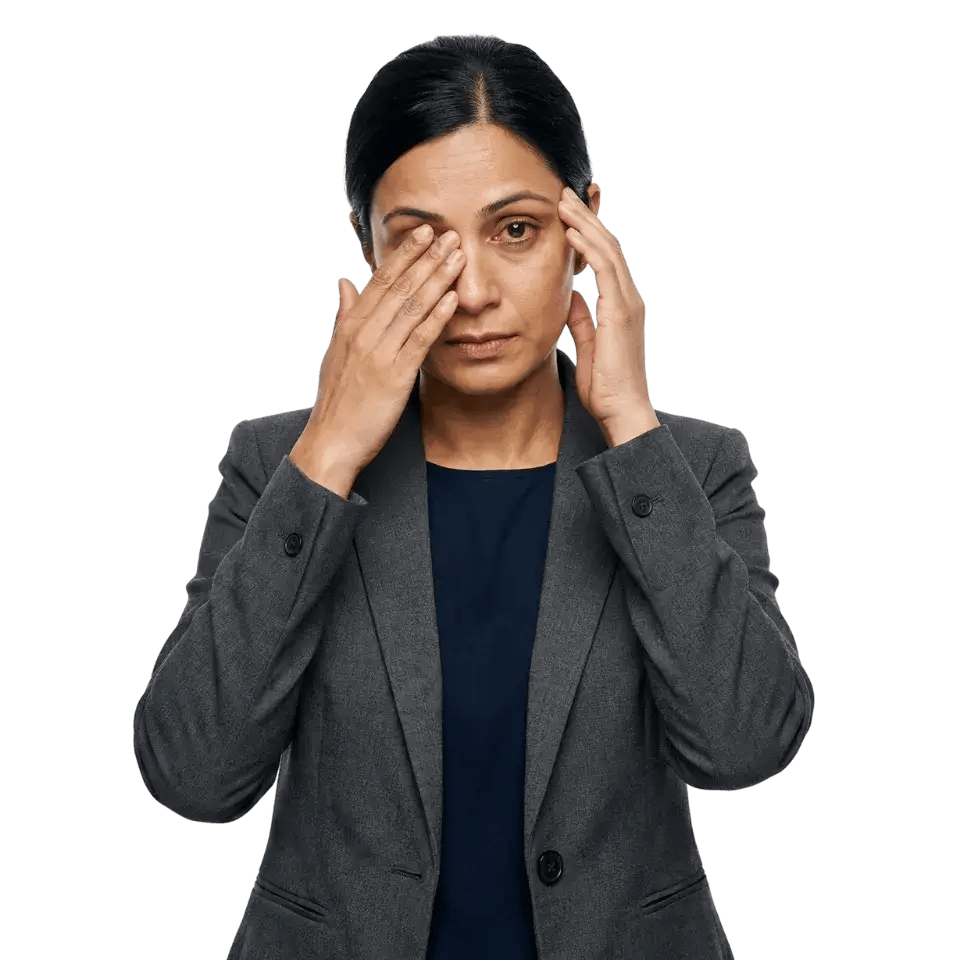
Dry eye can make your eyelids feel unusually heavy or fatigued, particularly by the end of the day. The continuous effort your eyes put into staying comfortable and maintaining focus takes a toll. You may find yourself wanting to close your eyes frequently, blink more often, or rub your eyes for relief.
- A sensation that your eyelids are weighed down
- Difficulty keeping your eyes open during focused tasks
- A strong urge to blink or squeeze your eyes shut
- Fatigue centered around your eyes rather than general sleepiness
Your tear film forms the outermost surface of your eye and plays a vital role in clear vision. When the tear layer breaks up unevenly, light entering your eye scatters, causing temporary blurriness. You may notice that blinking sharpens your vision for a moment, only for it to blur again within seconds. This fluctuating clarity is a hallmark sign of tear film instability related to dry eye.
Without a healthy tear film to protect and cushion the eye surface, your eyes can become more reactive to bright lights, glare, and sun exposure. Indoor lighting, computer screens, and sunlight may all feel harsher than they once did, causing you to squint more often or reach for sunglasses in moderate lighting.
Mild light sensitivity is common with dry eye. However, severe sensitivity that makes it difficult to open your eyes, especially when combined with pain, may signal a more serious condition that requires prompt evaluation.

What Makes Dry Eye Symptoms Worse
Several everyday activities and environmental conditions can intensify dry eye symptoms. Identifying your personal triggers is an important part of managing your comfort and protecting your eye health.
When you focus on a screen, your blink rate can drop by half or more compared to normal. Blinking is what spreads fresh tears across your eyes, so fewer blinks mean your tear film evaporates faster. Reading, driving, or doing any detailed work that holds your visual attention for long stretches can have the same drying effect.
Environmental factors have a direct impact on how quickly your tears evaporate. Wind speeds up moisture loss, while smoke and air pollution irritate the eye surface directly. Heating and air conditioning systems reduce indoor humidity, creating a dry atmosphere that pulls moisture away from your eyes throughout the day.
- Sitting near air vents or fans
- Spending time outdoors on windy days
- Exposure to cigarette smoke or campfire smoke
- Working in climate-controlled spaces with low humidity
Contact lenses rest directly on your tear film and can absorb moisture from your eyes over the course of the day. Some lens materials and wearing schedules are harder on dry eyes than others. If your symptoms peak when you are wearing lenses or worsen as the day goes on, your contacts may be contributing to your dryness.
If you develop redness, pain, or increased light sensitivity while wearing lenses, remove them immediately and contact our office before resuming wear. We can help you explore lens options that are better suited to sensitive or dry eyes.
Many common medications reduce tear production as a side effect. Antihistamines, decongestants, diuretics, beta blockers, antidepressants, hormone therapy, and certain sleep or anxiety medications are frequent contributors. Topical glaucoma drops can also worsen dryness. Health conditions including autoimmune diseases such as Sjogren syndrome and rheumatoid arthritis, diabetes, thyroid disorders, rosacea, blepharitis (inflammation of the eyelid margins), and meibomian gland dysfunction (a condition where the oil-producing glands in your eyelids stop working properly) can all interfere with healthy tear production.
Always tell your doctor about every medication you take and every health condition you manage, including skin conditions and allergies. A complete picture helps us tailor your care plan effectively.
Symptom patterns vary from person to person. Some people feel worse in the morning due to overnight eyelid exposure or incomplete eyelid closure during sleep. Others feel fine after overnight rest, with discomfort building as the day progresses and environmental exposures accumulate. Seasonal shifts matter too, as winter heating and summer air conditioning both create challenging conditions for tear film stability.
- Morning symptoms may be better or worse depending on individual factors
- Afternoon and evening symptoms often peak for many people
- Cold, dry winter air tends to worsen dryness
- High pollen seasons can trigger reflex tearing and irritation
Symptoms That Need Immediate Attention
Most dry eye symptoms are uncomfortable but not urgent. However, certain warning signs should prompt you to contact our office right away or seek emergency care, because they may point to a more serious condition.
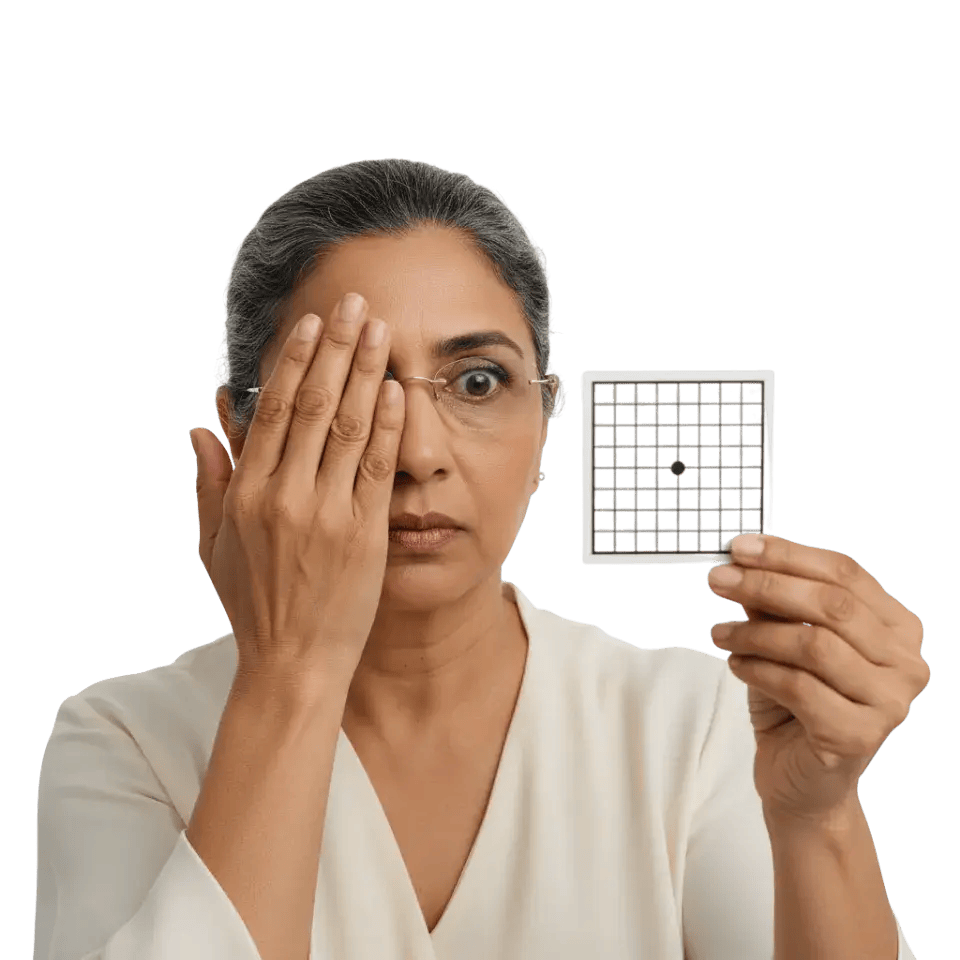
Dry eye can cause mild, temporary blurring that clears with a blink. A sudden sharp drop in vision that does not clear, or vision changes accompanied by other worrying symptoms, is a different matter entirely. This may signal a serious problem beyond dry eye and requires urgent evaluation.
Do not wait or assume it will improve on its own. Contact our office immediately or visit an emergency eye care center if this happens.
If you wear contact lenses and develop eye pain, redness, discharge, or severe light sensitivity, remove your lenses immediately and contact our office the same day. These symptoms can signal a corneal infection or ulcer, which requires urgent treatment to prevent lasting vision damage.
- Remove lenses right away and do not reinsert them until evaluated
- Pain or discomfort that continues after lens removal
- Redness that increases or does not improve within hours
- Any discharge, especially if thick, yellow, or green
- Severe light sensitivity that makes it difficult to keep your eye open
Dry eye discomfort is usually described as irritation, grittiness, or burning. True pain, especially sharp or stabbing sensations, suggests something more urgent. If you feel like a foreign object is lodged in your eye and you cannot flush it out, or if pain is severe and unrelenting, seek care right away.
Do not rub your eye, as this can worsen any damage. If you wear lenses, remove them gently. If symptoms persist after rinsing your eye with clean water or saline, contact our office immediately.
- Pain that worsens rather than improves
- A persistent sensation of something stuck despite rinsing
- Inability to open your eye comfortably
- Pain that occurs alongside vision changes
Dry eyes can appear mildly bloodshot, but significant redness combined with yellow, green, or thick discharge points to a possible infection such as conjunctivitis (pink eye). If redness is also accompanied by marked pain, severe light sensitivity, or reduced vision, seek urgent evaluation even if discharge is minimal.
If your eyelids are stuck together in the morning, you notice pus, or redness spreads quickly, call our office the same day.
Any symptoms that develop after a direct injury to your eye, such as being poked, struck, or splashed with chemicals, require immediate professional evaluation. If a chemical contacts your eye, begin flushing right away with clean water or saline and continue rinsing for at least 15 minutes while someone arranges transport to emergency care.
Even if discomfort seems mild at first, injuries can worsen rapidly and may involve scratches, foreign bodies, or chemical burns that cause lasting damage if left untreated.
How We Diagnose the Cause of Your Symptoms
Accurate diagnosis is essential because dry eye has several different causes, and the most effective treatment depends on identifying which one is responsible. We use a combination of your personal history and targeted clinical tests to get a complete picture.
Your description of when, where, and how your symptoms occur gives us essential clues. We will ask about the specific sensations you feel, what makes them better or worse, and how long you have been experiencing them. We also use standardized questionnaires to measure your baseline discomfort and track changes over time.
Be as detailed as you can. Even small details, like noticing dryness only in one eye or symptoms that spike during specific activities, help guide our diagnostic approach.
We use specialized tests to measure both the quantity and quality of your tears. One test places a small strip of paper under your lower eyelid to assess how much moisture your eyes produce. Another test uses a special dye to observe how quickly your tear film breaks apart on the eye surface. Additional staining dyes highlight areas of damage or dryness on the cornea (the clear front surface of your eye) and conjunctiva (the thin tissue lining your eyelids and the white of your eye).
- Schirmer test to measure tear volume
- Tear breakup time to assess tear film stability
- Osmolarity testing to check the salt concentration of your tears
- Meibography imaging to view the oil-producing glands in your eyelids
- Inflammatory marker testing such as MMP-9 where applicable
We examine your eyelids, lashes, and the surface of your eyes under magnification using a slit lamp, a specialized microscope used in eye exams. This lets us detect inflammation, clogged oil glands, tiny surface scratches, and other signs of dry eye. We also check whether your blink is complete, since incomplete blinking can accelerate tear evaporation and worsen dryness.
Evaluating your meibomian glands by gently pressing on the eyelid margins to examine their secretions tells us whether your eyes are producing enough healthy oils to keep tears from evaporating too quickly.
Dry eye generally falls into two main categories: not enough tears being produced (called aqueous-deficient dry eye) or tears evaporating too quickly because of poor oil quality (called evaporative dry eye). Many people have a combination of both, often alongside inflammation that keeps the cycle going. Identifying your specific type allows us to recommend therapies that target your actual problem rather than providing only temporary symptom relief.
Relief Options for Dry Eye Symptoms
Effective dry eye care often involves a layered approach. We match treatments to the root cause of your symptoms, starting with the most appropriate option for your situation and adjusting over time as needed.
Artificial tears are lubricating drops that supplement your natural tear film and provide temporary moisture. They are often the first step in managing symptoms. Many formulations are available, including preservative-free options that are gentler for frequent use. If you need drops more than four to six times per day, a preservative-free formula is the better choice. Avoid redness-reliever drops for regular use, as they can worsen dryness over time.
Using artificial tears consistently throughout the day, rather than waiting until discomfort becomes severe, tends to provide better results. We can help you choose a product that matches your symptoms and lifestyle.
When over-the-counter options are not enough, prescription medications can help your eyes produce more of their own tears or reduce the inflammation that interferes with tear production. Common options include immunomodulatory drops such as cyclosporine, LFA-1 antagonists such as lifitegrast, short-term topical corticosteroids under close supervision, and tear-stimulating medications in appropriate cases.
Many anti-inflammatory prescription therapies take several weeks to months to show their full benefit, so patience and regular follow-up are important. We monitor your progress and adjust your plan as needed to ensure both safety and effectiveness.
If symptoms persist despite at-home care, we may recommend in-office procedures designed to address the root causes of your dry eye. Treatments that open blocked oil glands, reduce eyelid inflammation, or decrease tear drainage can provide longer-lasting results. Options such as thermal pulsation devices, intense pulsed light therapy, meibomian gland expression, and punctal plugs are commonly used in current practice.
Candidacy and outcomes vary based on your specific dry eye type and overall health. Certain therapies have contraindications, such as skin type or photosensitivity considerations for light-based treatments. We will discuss which options are appropriate for you and set realistic expectations for your improvement.
Simple changes to your daily routine can make a meaningful difference in how your eyes feel. Taking regular breaks during screen time, using a humidifier to add moisture to the air, staying well hydrated, and protecting your eyes from wind and smoke all help reduce symptom flare-ups. Regular eyelid hygiene with gentle lid scrubs can also improve comfort when blepharitis or oil gland problems are involved.
- Follow the 20-20-20 rule: every 20 minutes, look 20 feet away for 20 seconds
- Position screens slightly below eye level to reduce how much of your eye surface is exposed to air
- Wear wraparound sunglasses on windy days
- Apply warm compresses to your closed eyelids to help oil glands function better, using a comfortably warm temperature for no more than 10 minutes at a time
- Avoid directing air vents or fans toward your face
- Use eyelid scrubs or cleansers as recommended for blepharitis or oil gland maintenance
How quickly you respond to treatment depends on the therapy used and the severity of your condition. Some approaches work within days, while others require weeks or months. If your symptoms do not improve as expected or they worsen despite treatment, schedule a follow-up visit. Contact our office promptly if you develop increasing pain, worsening redness, new light sensitivity, or reduced vision, as these may signal complications that need immediate attention.
Dry eye is often a chronic condition that requires adjustments to your care plan over time. Staying in regular contact with our office ensures you receive the relief you need and allows us to catch any changes in your eye health early.
Frequently Asked Questions
These answers address common questions we hear from patients and are meant to add practical guidance beyond what is covered above.
Dry eye symptoms frequently fluctuate based on your environment, activities, and even the season, which can make the condition feel unpredictable. You might feel comfortable one day and noticeably irritated the next, or find that mornings are easier than evenings depending on your individual pattern. This variability is completely normal and does not mean your condition is getting worse. Keeping a brief symptom log can help us spot your specific triggers more quickly during your evaluation.
Yes, it is possible for dry eye to be more pronounced in one eye, particularly if that eye has a specific issue such as incomplete eyelid closure, a previous injury, or differences in tear gland function. Environmental factors can also create one-sided symptoms, such as sleeping with one side of your face near a fan or heater vent. We examine both eyes thoroughly to understand why one may be more affected than the other, since identifying the cause guides our treatment decision.
Both grittiness and burning stem from an inadequate tear film, but they can reflect slightly different aspects of the problem. Grittiness tends to relate to the physical sensation of an unstable or rough tear surface, while burning more often reflects inflammation or increased eye surface exposure. Tracking which sensation is strongest and when it occurs helps us refine your diagnosis and select the most targeted treatment.
Many patients achieve significant relief and manage their symptoms very well with the right combination of treatments and lifestyle adjustments. However, because dry eye is often a chronic condition, ongoing care is usually more realistic than a one-time cure. Our goal is to reduce your discomfort to a level where it no longer interferes with your daily life and to protect your long-term eye health. We reassess your symptoms regularly and adjust your care plan as your needs evolve.
If your symptoms are persistent, interfere with work or daily activities, or are not improving with over-the-counter drops, it is worth scheduling an evaluation rather than continuing to manage on your own. Dry eye that goes unaddressed can lead to ongoing inflammation and surface damage over time. An early evaluation also helps rule out other conditions that can mimic dry eye symptoms, ensuring you receive the most appropriate care from the start.
Visit Washington Eye Institute for Dry Eye Care
If you are experiencing any of the symptoms described on this page, our team at Washington Eye Institute is here to help. We provide thorough evaluations and personalized treatment plans built around the specific cause of your discomfort, not just temporary symptom relief. Our experienced doctors are committed to your long-term eye health and comfort. We welcome you to schedule an appointment at any of our three convenient locations serving the DC metro area.